By Marshall Cohen
WASHINGTON — The rapidly expanding industry of domestic drones is effectively unregulated when it comes to privacy protections — but not for lack of trying.
Congress has passed few laws regulating drones, or unmanned aerial vehicles, but two clear sides emerged: a handful of lawmakers and civil liberties groups pushing for privacy restrictions are stacked against a pro-drone caucus with dozens of House members and support from the UAV industry.
The Obama administration regularly deploys armed drones for overseas military strikes, and unarmed models of the same Predator drones are used to patrol U.S. borders.
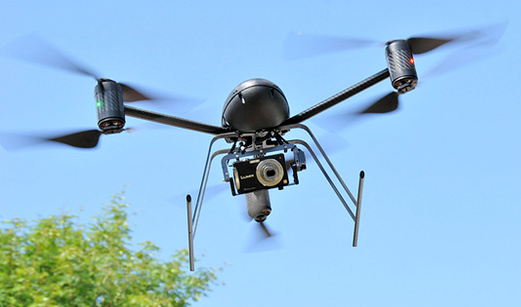
But smaller models are now being used domestically for search and rescue missions, detecting forest fires, some law enforcement efforts and scientific research. Supporters tout these and other benefits, but civil libertarians cringe at the thought of government-controlled eyes in the sky.
The Federal Aviation Administration has issued 300 special permits to UAV operators and is drafting safety rules that would allow more drones in U.S. airspace by 2015, as required by the FAA reauthorization law Congress approved last year.
An estimated 30,000 drones could fill American skies by 2020, and experts agree the industry is on the verge of unprecedented domestic growth. It could develop into an $89 billion industry and create thousands of jobs within a decade, according to a report by the Teal Group, an aerospace consulting firm.
Privacy advocates warn that as the industry grows, the government could use drones for unlawful surveillance on U.S. soil. The FAA has not looked much into privacy issues — the agency has even said it is ill-equipped to do so — and no current laws require federal agencies to consider privacy while regulating UAVs.
Lone wolves fight for privacy.
A few members of Congress want to fill the void. Rep. Ted Poe, R-Texas, has led the charge. His attempts to pass drone privacy restrictions failed last session, but with the new Congress may come new momentum.
Poe introduced the Preserving American Privacy Act last month, a more detailed bill than his previous attempt that has picked up two key co-sponsors: Rep. Jim Sensenbrenner, R-Wis., chairs the subcommittee that is handling the bill, and Rep. Zoe Lofgren, D-Calif., gives the proposal bipartisan backing.
The bill would ban the government and law enforcement agencies from using drones to conduct surveillance on individuals or their property without obtaining a warrant, and evidence gathered without a court order would be impermissible at trials. There are exceptions for emergencies, when consent is given and when the drone is within 25 miles of the U.S. border, where many are already stationed.
Another key provision explicitly bans outfitting domestic drones with firearms or other lethal weapons. There is also a built-in mechanism for Justice Department oversight.
“Legitimate uses by government and private citizens do occur, but a nosy neighbor or a Big Brother government does not have the right to look into a window without legitimate cause or, in the case of the government, probable cause,” Poe said on the House floor.
The bill was referred to the House Judiciary Committee. The panel plans to explore the issue and determine if legislation is needed to prevent privacy abuses, according to an aide with knowledge of the situation who spoke on condition of anonymity.
Domestic drones gained national attention last week when firebrand Sen. Rand Paul, R-Ky., staged a 13-hour filibuster against the nomination of John Brennan as CIA director, arguing that they could be used to kill Americans on U.S. soil. Paul proposed a drone privacy bill last year that died when the 112th Congress ended, but Rep. Austin Scott, R-Ga., reintroduced it this month.
Privacy groups including the American Civil Liberties Union and the Electronic Privacy Information Center have supported these efforts, which they say are overdue. But there is strong opposition from AUVSI, which claims the bills are introduced under the guise of privacy and are designed instead to debilitate their market. It spent $60,000 lobbying against the Poe bill in 2012.
A pro-drone caucus
As U.S. involvement in overseas wars wind down, defense and aerospace corporations are shifting focus to domestic markets. Lockheed Martin and Northrop Grumman, whose influence with Congress is established because of their role as defense contractors, are among the companies that comprise the drone lobby, known as the Association for Unmanned Vehicle Systems International.
AUVSI represents the industry at congressional hearings, holds conferences and promotes commercial and government uses of drones — a term the industry never uses. The trade group works closely with the Congressional Unmanned Systems Caucus, formed in 2009 by Reps. Buck McKeon, R-Calif., and Henry Cuellar, D-Texas. A few dozen House members have since joined, and their stated mission is to support the industry and “rapidly develop and deploy” more systems in the United States. “Congressman McKeon recognizes the cause for privacy concerns and firmly believe that those concerns need to be addressed by the appropriate federal agencies,” spokeswoman Alissa McCurley said. “It is his belief that both the Department of Justice and Commerce Department are best equipped and responsible for regulating the law enforcement and commercial unmanned aerial systems markets.”
The four largest members of AUVSI — General Atomics, Northrop Grumman, Boeing and Lockheed Martin — gave more than $1.4 million to drone caucus members in 2012.
Before that, the group spent $280,000 to drum up support for the FAA Modernization and Reform Act, which President Barack Obama signed last year. The law includes a provision that authorizes expanded civilian drone use and requires the FAA to prepare U.S. airspace for unmanned vehicles.
Forty-five of the 60 drone caucus members voted for the final version of the bill, and five were co-sponsors. Caucus member Rep. Candice Miller, R-Mich., wrote the amendment that directs the FAA to expedite integration of drones into U.S. airspace by 2015. AUVSI even boasted of writing the parts of the law “word-for-word,” according to internal documents leaked by Republic Report, a nonpartisan website that investigates lobbying.
“We were a contributing factor,” said Mario Mainera, the organization’s government relations manager. “We work with committee staff in providing provisions that our members supported and requested. We work on behalf of our membership.”
A handful of senators have expressed interest in learning more about the issue; a fledgling Senate caucus exists to study UAVs but it is less organized than the House caucus. Some senators simply support the industry’s benefits to society.
“There are going to be great interests in rural areas for example, for isolated mountaintops where you would have the opportunity to rescue people,” said Sen. Ron Wyden, D-Ore. “That sort of thing would be certainly appealing.”
Unclear path ahead
The public views drones in American skies with a skeptical eye, and the aircraft are still largely associated with military uses in Iraq and Afghanistan. A majority of Americans oppose drone strikes on U.S. soil, even to prevent a terrorist attack, according to a recent Huffington Post/YouGov poll. Fifty percent of those surveyed said there is no legal justification for using drones in the U.S. to prevent terrorist attacks, even if it means killing Americans. In the face of congressional inaction, states legislatures and city councils are taking up the issue of domestic drone use and regulation.
Charlottesville, Va., last month became the first city to ban drones, and Virginia Gov. Bob McDonnell could sign a bipartisan bill prohibits all UAVs in the state for two years. Similar bans recently were passed by the Montana Senate and North Dakota House, and anti-drone legislation is pending in 28 other states.
These efforts complicate the government’s plan to prepare domestic airspace for drones. The FAA missed its Dec. 31, 2012, deadline to select six UAV test sites and blamed privacy issues for delaying the evaluation process. An FAA official said test sites would likely be selected by the end of the year.
“All the beneficial uses won’t be possible if cities are banning drones altogether,” said one House staffer who worked on the Poe bill. “The industry should take the privacy issue very seriously, and if they did, they would not have to deal with this situation.”