Author Archives: Tara McKelvey

Case Study: The Media and Gardez

By TARA McKELVEY
Carnegie Fellow

On February 12, 2010, U.S. Special Operations helped to conduct a nighttime raid in Paktia Province, Afghanistan, and five civilians ended up dead — three women, including two who were pregnant; a district prosecutor; and a local police chief. Soldiers claimed that the men were insurgents, and that the women had been found dead, bound and gagged in the house, when the soldiers arrived. The soldiers made it seem as though the women had been victims of Taliban-organized honor killings.

NATO issued a press release entitled, “Joint Force Operating in Gardez Makes Gruesome Discovery,” with details about the deaths of the men and women at the house, and a CNN report, with contributions by reporter Barbara Starr, repeated the claims from soldiers; the story was entitled, “Bodies found gagged, bound after Afghan ‘honor killing.’” The military’s account, along with the report by CNN, made the incident in the village appear to be yet another disturbing account of Taliban brutality towards women.

Nevertheless, there were hints that the story of the raid was more complicated than the NATO public-affairs office and CNN had indicated. The New York Times reported on the day after the raid that there were discrepancies in the accounts of the raid. In addition, an Associated Press reporter named Amir Shah was even more skeptical about the NATO characterization of the raid, filing a video segment about the incident that was headlined, “NATO says insurgents killed; family says civilians.” Shah’s report, which contradicted both the NATO report and the CNN segment, appeared on an NBC affiliate, CW56, in Boston. Meanwhile, a RAWA News article that was posted on February 12 was even more direct: It was entitled, “Villagers accuse US Special Forces for killing five civilians.” The grammar was clumsy, but nevertheless the headline and accompanying article made it clear that there was another side to the story.

As it turned out, the Special Forces’ claims were untrue. The Pentagon admitted several weeks later that Special Forces had killed the men and women and had in fact dug bullets out of the bodies of the women to hide facts of the crimes. The press release that NATO had originally issued about the raid, and that the CNN reporter had cited in their segment, currently appears as a blank page with the following sentence: “This document has been rescinded.”

Many of the facts about the deaths of the Afghan men and women on that night remain in dispute. But it is clear that something went terribly wrong that night – and moreover that botched nighttime raids had become commonplace. In the same month that the incident occurred, the campaign of nighttime raids became a controversial aspect of the efforts by U.S. Special Forces in Afghanistan, with the publication a report that was issued by Open Society Institute (Available as a PDF), a New York-based organization headed up by financier George Soros. “While attacking homes at night, rather than daytime, may add an element of surprise and reduce the risk to pro-government forces, it dramatically increases the chances of indiscriminate use of force against innocent women, children, and men in the house,” wrote the authors of the report.

For a variety of reasons, the Special Forces raid on the house in Gardez ended in five needless deaths. The incident could have immediately prompted U.S. Special Operations to re-evaluate the policy of nighttime raids that were being conducted in Afghanistan and to determine whether the benefits of these actions outweighed the costs. One analyst at the United States Army Military History Institute, which is located at United States Army War College, told me that Special Forces have been the “worst perpetrators” of civilian deaths in the war in Afghanistan. Yet it took several weeks for the U.S. media to accurately assess the original statements from the military about the February raid and to report on what had happened that night. This was an unfortunate, and avoidable, lapse in the media coverage of the war in Afghanistan.

Left-leaning journalists such as Salon’s Glenn Greenwald, was harsh in his criticism of the American journalists for their failure to report on the incident, even harsher than he was in his writing about the U.S. soldiers who had committed the murder. “What is clear — yet again — is how completely misinformed and propagandized Americans continue to be by the American media, which constantly ‘reports’ on crucial events in Afghanistan by doing nothing more than mindlessly and unquestioningly passing along U.S. government claims as though they are fact,” he wrote in an April 5, 2010, article.

Salon’s Glenn Greenwald was not the only one who was angry about the media coverage. Journalist Jerome Starkey, who was based in Afghanistan and wrote for The Times of London, accused both the American and British media of pulling their punches and refusing to investigate stories in Afghanistan. “This self-censorship is compounded by the ‘embed culture,’ which encourages journalists to visit the frontlines with NATO soldiers, who provide them food, shelter, security and ultimately with stories,” he wrote in a piece for Nieman Watchdog.

The worst offenses were committed that night by soldiers who decided to kill Afghan civilians – not by the journalists who were lax in their efforts to investigate the incident. Nevertheless, journalists should not have relied so heavily on the press releases issued by NATO’s public-affairs office; instead, journalists could have made a concerted effort to speak with people who had seen what happened during the raid, which would have allowed the journalists to write more complete and nuanced articles. If the stories about the raid had included more sources and additional reporting, the American public would have learned about a raid that had gone horribly wrong and perhaps the practice of these nighttime operations would have been re-evaluated. Unfortunately, the practice of these raids continued unabated.

Military officials expressed regret for crimes; a U.S. Special Operations commander, Vice Admiral William McRaven, visited the village where the men and women had been killed and apologized. “I am the commander of the soldiers who accidentally killed your loved ones,” he told the family, as reported by ABC News. That was the end of the story.

America’s Shadow Warriors: Legal Dimensions of Special Forces and the Targeted Warfare

By TARA McKELVEY
Carnegie Fellow

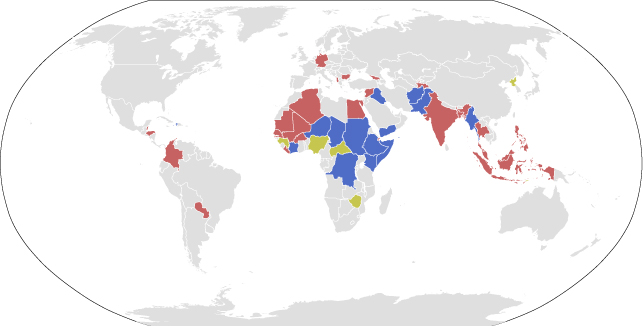
Rather than conduct multiple full-scale, overt wars against terrorists, President Barack Obama has instead embarked on a shadowy campaign against Al Qaeda, the Taliban, and other extremist groups around the world through the use of the military’s Special Operations units. This new type of warfare employs a range of weapons, such as helicopter gunships and cruise missiles, as well as the distribution of propaganda, or psychological operations, and is being conducted in Pakistan, Somalia, Saudi Arabia, Yemen, and about 50 other countries around the world. The most dramatic — and controversial — divisions of the program are “direct action,” as the military describes the units that focus on killing terrorism suspects and militant leaders, and they are also among the fastest growing divisions.

Yet nearly two years after the Obama administration began ramping up its stealth forces and dispatching teams of special operators abroad, questions remain unanswered: Are these operations killing enough Al Qaeda leaders to destabilize the terrorist organizations? Or are these operations inadvertently helping Al Qaeda build a cadre of suicide bombers who will pose an even greater threat to U.S. peace and security? This section of The Age of Special Warfare examines new data about Special Operations and other forms of U.S.-directed clandestine warfare in order to shed light on whether these operations reduce the chances of conflict between the U.S and non-state actors such as Al Qaeda or increase the likelihood that Al Qaeda or other terrorist groups will flourish and be able to inflict violence against this country.

The increasing reliance on Special Operations and other forms of targeted warfare has occurred gradually over the past nine years; the Bush administration began to ramp up the use of targeted warfare after the September 2001 terrorist attacks, and President Obama relied even more heavily on these operations after he took office in 2009. Overall funding for Special Forces has more than doubled over the past nine years, from about $3.8 billion in Fiscal Year 2001 to about $9.8 billion requested for fiscal year 2011. During that period, U.S. Special Operations personnel expanded by 29%, increasing from 45,655 to 58,657 men and women. 1

President Obama has been more circumspect in his approach to the deployment of troops and in his strategy toward combating terrorist groups. As Stephen Holmes, the Walter E. Meyer Professor of Law at New York University, explained, the president is more realistic about his ability to face threats to the United States and “doesn’t think he can replace foreign policy with exorcism, ending all the tyranny in the world and so on.” 2

The rhetoric is toned down, but nevertheless, as Holmes has noted, Obama initiated a more aggressive military campaign of targeted warfare against terrorist groups than his predecessor; after taking office in 2009, Obama decided that the United States would expand the number of terrorism suspects who are targeted for death in countries around the world and that U.S. special operators would carry out missions to eliminate them.

Despite the differences in style and philosophy of Presidents Bush and Obama, their approaches to counterterrorism are remarkably similar.

Obama has not publicly expressed a philosophical or moral basis for a global campaign against terrorists, as his predecessor once did, nor does President Obama appear to believe in a worldwide battle against evil, but as a practical matter he has continued his predecessor’s counterterrorism strategy, based on lethal strikes against militants and Al Qaeda leaders, and indeed Obama has expanded the role of Special Forces and military units that specialize in direct action. Overall, Obama’s counterterrorism strategy is consistent with that of his predecessor, particularly in the administration’s legal approach to the issues of combating terrorism. 3

Shortly after the presidential election in 2008, then President-elect Obama and his deputies who specialize in national security issues were informed of their predecessors’ approach to fighting terrorism, including an expansion of authority for the U.S. government to carry out deadly missions against Al Qaeda and other terrorists that had been approved near the end of President Bush’s term. 4 President Obama and current administration officials embraced this approach and welcomed the enhanced powers of the government. The expansion of authority meant, for example, that the government could kill terrorism suspects when their names were not known to the U.S. officials.  In other words, lethal strikes could be carried out against individuals who appeared to be caught up in terrorist activities in places around the world, even when little else was known about them. In these instances, the officials were relying on so-called “pattern of life” analysis based on observation of the suspects with the help of surveillance devises, bolstered by information provided by individuals who were familiar with the daily activities of the suspects.

Critics of both the current and former administrations believe that this expansion of authority for the government, and the increased allowances for the elimination of terrorism suspects, escalates the chances that U.S. special operators will make mistakes in their targeting of suspects overseas and that they will accidentally kill the wrong people. Obama and his deputies did not appear to be overly concerned about these human rights issues, at least publicly, and when there were differences between their counterterrorism strategy and that of their predecessors, Obama’s approach to eliminating terrorists has been more expansive, and increasingly zealous, in its application.

The clandestine programs of targeted strikes, or assaults by bands of special forces, helicopter gunships and unmanned aerial vehicles, as well as the training and equipping of foreign forces, have been ramped up dramatically under the Obama administration.  Officials  lobbied to increase funding for a counterinsurgency fund for Pakistan, for example, by expanding its budget from $700 million in 2009 and 2010 to nearly twice that amount, or $1.2 billion, in 2011, so that the U.S. Special Forces could build on their capacity to train Pakistani Frontier Corps and to assist in their efforts to fight against the Al Qaeda and the Pakistani Taliban leaders who are living and working near the Afghan border. 5 A professional staff member working on the Foreign Relations Committee confirmed that roughly 200 U.S. special operators are now working in Pakistan, more than double the number from the year before. A small number, with impact; in the 1980s, there were only about 55 U.S. advisors in El Salvador at any given time. Despite the official U.S. position that American soldiers were not patrolling or collecting intelligence in that country. The Administration has in recent weeks become more aggressive, escalating the number of drone strikes and going after the ferocious Haqqani network of militants in Pakistan.

“The U.S. is losing patience, and they now think that taking on the Haqqani network is necessary,” said Moeed Yusuf, a South Asia adviser at the Washington-based United States Institute of Peace. 6 The steady increases in manpower and resources for Special Forces in Pakistan and in other countries show the commitment that the executive branch, whether under Bush or Obama, has toward these types of operations. In an example of how the Obama administration has been relying more heavily on clandestine missions than in the past, and beefing up the U.S. capacity to carry out covert acts, the Central Intelligence Agency has launched almost four times the number of drone strikes since the beginning of his term in office as they conducted during the final year that President Bush was serving in the White House. 7

Obama’s decision to embark on an ambitious campaign of targeting Al Qaeda and militant leaders in sovereign nations such as Yemen and Pakistan, at least according to New York University’s Holmes and other scholars, has led him into a new legal arena in which the parameters both for targeting suspects and for running operations within the borders of other nations remain unclear. “He’s got an assassination list – without due process,” Holmes said, criticizing the President’s decision to eliminate terrorism suspects around the world through the use of Special Forces and drone strikes.

People in the military see things differently: They believe that they are conducting military operations just as they have always done – they are pursuing enemy fighters and killing them – and that is simply part of warfare. Military officers refer to it as “high-value targeting,” which they define as part of combat, says a former commander of special operators, adding, “Benazir Bhutto is assassination,” referring to the death of Bhutto, who served as prime minister of Pakistan, in a suicide attack in 2007. “We’re not into the Benazir Bhutto stuff.”

Despite the ambiguous legal reasoning for this type of warfare, Obama’s decision to embark on an ambitious campaign of targeting Al Qaeda and militant leaders in sovereign nations such as Yemen and Pakistan, at least according to Holmes and other scholars, has led him into a new legal arena in which the parameters both for targeting suspects and for running operations within the borders of other nations remain unclear.

Nonetheless, Obama and his deputies have made a significant commitment to the military and the CIA and their efforts to carry out the drone strikes and other forms of targeted attacks; administration officials believe that this type of clandestine warfare is the best way to protect the nation from a future attack.

Read Part One: Response to the Threat.


Notes:

  1. Michele L. Malvesti, “To Serve the Nation: U.S. Special Operations Forces in an Era of Persistent Conflict” Center for a New American Security, Washington, June 2010. ↩
  2. Stephen Holmes, the Walter E. Meyer Professor of Law at New York University, Seventh Annual Global Security Forum, April 30 to May 1, 2010, Center on Law and Security, New York University School of Law, New York. ↩
  3. February 15, 2010, The New Yorker, “The Trial” by Jane Mayer. ↩
  4. May 5, 2010, The Los Angeles Times. “CIA Drones Have Broader List of Targets” by David S. Cloud. ↩
  5. Lolita C. Baldor, “Pentagon Seeks Billions to Battle Terror Abroad” The Associated Press, February 4, 2010. ↩
  6. Author interview with Moeed Yusuf, a South Asia adviser at the Washington-based United States Institute of Peace, October 6, 2010. ↩
  7. The New York Times, “CIA Intensifies Drone Campaign Within Pakistan” by Mark Mazzetti and Eric Schmitt, September 28, 2010. ↩
Pages: 1 2 3 4 5