By Fritz Burgher
Privacy law has evolved over the past century as technology has rapidly improved. To learn about key Supreme Court decisions and how they may relate to domestic surveillance via the use of drones, explore the timeline below.

By Fritz Burgher
Privacy law has evolved over the past century as technology has rapidly improved. To learn about key Supreme Court decisions and how they may relate to domestic surveillance via the use of drones, explore the timeline below.
By Ashley Balcerzak and Taylor Hiegel
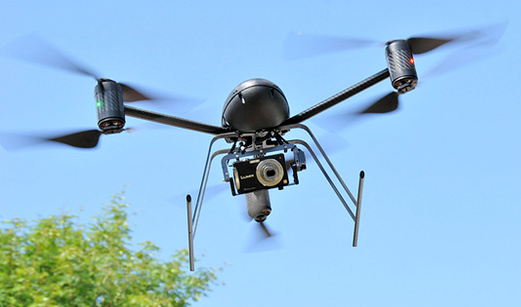
WASHINGTON – Last year, Police Chief John Crane discovered the Gadsden Police Department has owned two unmanned aerial vehicles since 2010. They were never used.
The two UAV wasps aren’t really needed, Crane has told reporters, and are being stored in a secure location until the department can conduct research on possible uses.
The Federal Aviation Administration says about 7 percent of the approximately 300 permits it has issued for UAV usage by government entities have gone to law enforcement. The permits are neede until the FAA determines regulations for more widespread use of drones, which are expected in 2015. Continue reading
Reporter Gideon Resnik interviews Amie Stepanovich of the Electronic Privacy Information Center and John W. Whitehead, founder of The Rutherford Institute in Charlottesville, Virginia, about civil liberties issues related to drones.
By Stephanie Yang
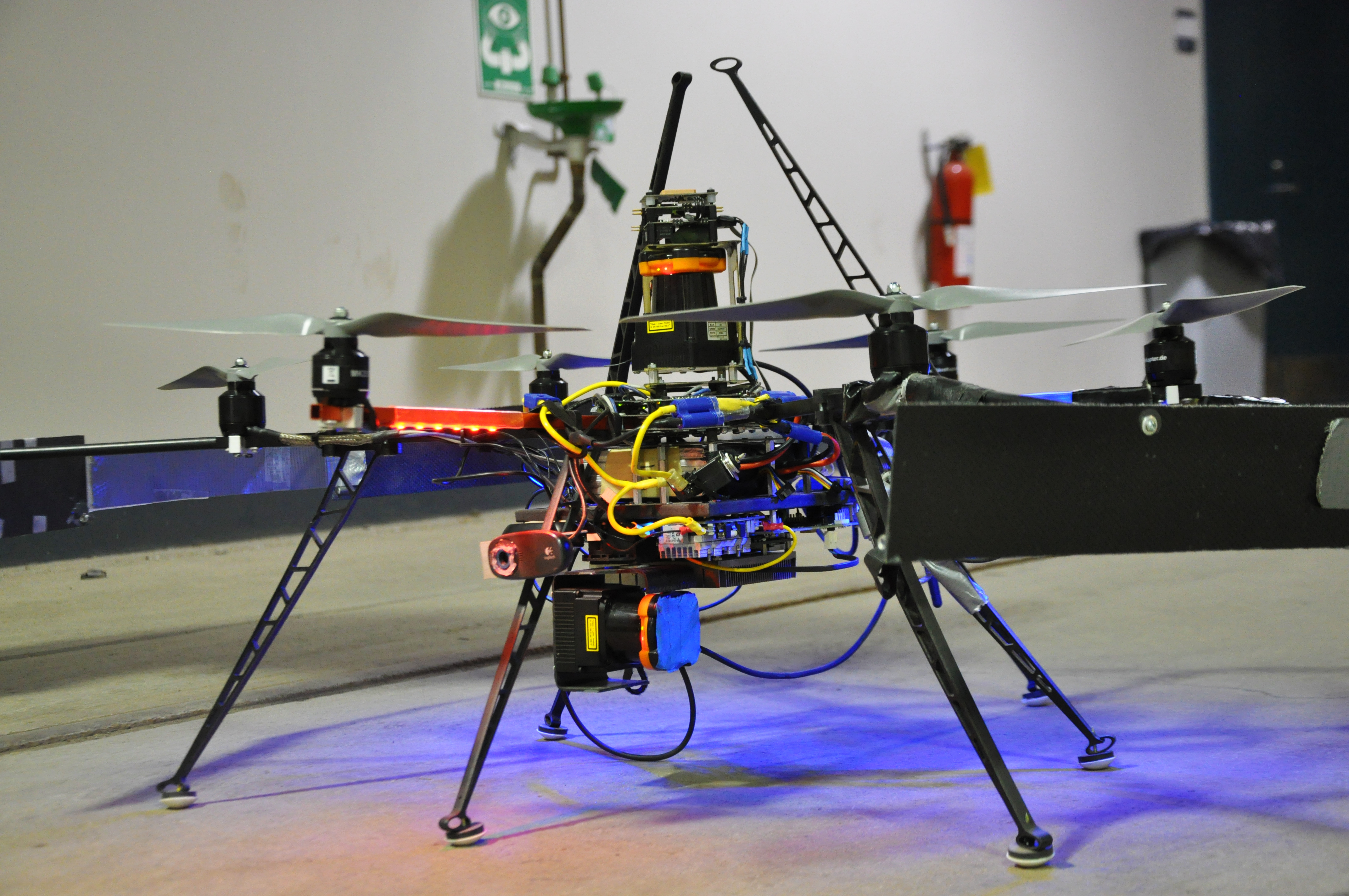
Jonathan Butzke, a Ph.D. student at The Robotics Institute at Carnegie Mellon, builds his own unmanned aerial vehicles, one of which he calls a hexacopter. (Stephanie Yang/Medill)
WASHINGTON— Three dozen universities now have government approval to use unmanned aerial vehicles — or drones — for everything from bachelor’s degree programs to environmental surveillance, while others are flying drones closer to the ground without any certification. And the presence of drones on college campuses is expected to increase exponentially as the Federal Aviation Administration works to loosen regulations on authorizing drone flight. Continue reading
By Cathaleen Chen and Kimberly Railey
WASHINGTON —The Senate immigration bill would create a a 24/7 surveillance system at U.S. borders that would rely significantly on increased use of drones.
Under the bill, no immigrant with provisional legal status could apply for a green card if the Department of Homeland Security hasn’t effectively secured the border — a benchmark that border hawks want tied to citizenship.
Currently, the U.S. Customs and Border patrol operates 10 unarmed drones. Continue reading
By Marshall Cohen
WASHINGTON — The rapidly expanding industry of domestic drones is effectively unregulated when it comes to privacy protections — but not for lack of trying.
Congress has passed few laws regulating drones, or unmanned aerial vehicles, but two clear sides emerged: a handful of lawmakers and civil liberties groups pushing for privacy restrictions are stacked against a pro-drone caucus with dozens of House members and support from the UAV industry.
The Obama administration regularly deploys armed drones for overseas military strikes, and unarmed models of the same Predator drones are used to patrol U.S. borders. Continue reading
