By Gideon Resnick
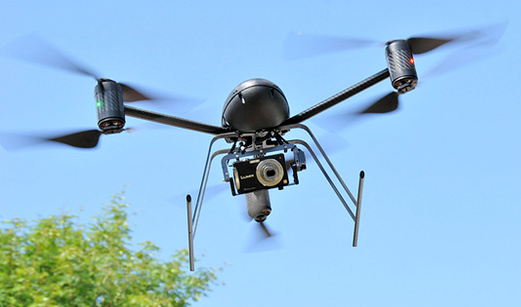
CHARLOTTESVILLE, Va. — Nestled in the Blue Ridge Mountains, Charlottesville is home to the University of Virginia with Thomas Jefferson’s Monticello nearby. Now it is also known as a “No Drone Zone” because of a City Council resolution prohibiting the production, lease or sale of drones within the city limits.
On Feb. 4, the Charlottesville City Council passed the resolution, which also prohibits the use of drones for surveillance, precludes information obtained by drones to be used in court and restricts any drones from carrying “anti-personnel devices.” Mayor Satyendra Huja, who voted for the resolution, is concerned that drones can infringe upon constitutional rights.
“There are no guidelines on how to use drones,” Huja said.
At the moment, Charlottesville and its law enforcement agencies are not actively pursuing drone technologies. But according to John Whitehead, founder and president of the Rutherford Institute, a civil liberties organization in Charlottesville, the time for drone legislation is now.
“They’re going to be everywhere, so I think what we need is protection of our civil liberties right now; we don’t need to wait,” Whitehead said.
In January this year, Whitehead drafted a model drone resolution, which he sent to Huja. In it he addressed concerns about the videotaping capabilities of UAVs saying that no one “will be safe from the prying eyes of these devices.” Whitehead also suggested the prospect of drones being armed with anti-personnel weapons, speculating that police departments would use such capabilities to quell protests like those of Occupy Wall Street in 2011. The final version of the resolution was drafted by activist David Swanson.
The February vote wasn’t the first time that the city council passed anti-drone legislation. In January 2012, the council voted on and approved a resolution that called on Congress to “end foreign ground and drone wars.”
Vice Mayor Kristin Szakos supported the 2012 measure, but was one of two city council members who voted against the second, which was approved 3-2.
“We’ve already got people looking at our roofs and our yards,” Szakos said. She doesn’t perceive domestic drones as an imminent threat to the privacy rights of citizens in Charlottesville. Szakos believes that law enforcement agencies could use the technology to their benefit in the future.
Charlottesville isn’t the only city to push back against drone use. Seattle Mayor Mike McGinn stopped the city’s police department from further developing its drone program, after it had acquired technology for law enforcement purposes. Similarly in December 2012, the Alameda County Board of Supervisors in California put a halt to plans to purchase a drone for the police department after the American Civil Liberties Union expressed concern.
Despite the Charlottesville opposition, drones are already in use in Virginia.
“We have universities in our state who use them for research,” Szakos said. Virginia Tech is part of a consortium that is applying for one of the six test sites the Federal Aviation Administration will choose this year, according to the Virginia governor’s office. The university has an Unmanned Systems Lab that houses nine kinds of aircraft. The FAA will examine a number of factors when considering applications for test site selection, including geographic and climatic diversity, location of ground infrastructure and research needs and population and air traffic density. Fifty applicants across 37 states have already applied for a test site, according to a spokeswoman at the FAA.
The state legislature passed a bill that would impose a two-year moratorium on UAVs. The bill is awaiting by Gov. Bob McDonnell.
McDonnell has until March 25 to take any action on the bill. While he has not said what he intends to do, last year he praised the use of drone technology as a potential means of fighting crime.
The Association for Unmanned Vehicle Systems International,, a prominent drone lobby group, says drones are no different than other types of surveillance technology now in use.
“You can go from GPS, computer, cell phone, traffic cameras, bank cameras, they’re all collecting data but nobody seems to be talking about them,” said Mario Mainera, government relations manager for AUVSI.
Mainera said the proposed two-year moratorium in Virginia is “being guided on erroneous information, not the facts.”
Virginia is among 30 states actively considering restrictions on drones or anti-drone legislation. Most of the language in these bills pertains to the lawful acquisition of UAVs by law enforcement agencies, requiring warrants for doing so and precluding the use of unmanned aerial vehicles from collecting data that does not pertain to the targeted subject in question.