Author Archives: Tara McKelvey

A Special Forces Lexicon

A glossary of terms that are commonly used by men and women who work in U.S. Special Operations and by journalists who cover these operations.

Black Operations.

Classified missions or operations. In most cases, the missions are “clandestine,” which means that they are kept secret to protect Americans and allied forces that are involved in an operation – i.e. capturing a Taliban leader. Afterwards, the mission is no longer secret; it is often reported on in the media, featuring interviews with some of the people who carried out the mission. In contrast, some of the black operations are “covert,” which means that U.S. government can deny that they are involved in these operations and therefore these operations must remain secret even after they have been completed. (See definition below.)

Some officials, such as Lieutenant General John Mulholland Jr., who has served as commanding general of Special Operations Command Central at MacDill Air Force Base, Fla., believe that journalists exaggerate the importance of the distinction between black and white operations, since on many occasions these operations meld together. “It’s almost a false analogy,” Mulholland told a reporter for the St. Petersburg Times. “It’s not one or the other. It’s how you blend all of our nation’s capabilities to achieve a certain effect on the battlefield. The discussion is much more nuanced than people like to make it.”

Benjamin Abel, a former public affairs officer at the U.S. Army John F. Kennedy Special Warfare Center and School in Fort Bragg, North Carolina, told me that their world has a variety of shades. “There’s black and white – and there’s grey,” he explained. “The army does a lot of grey.”

Some terrorism analysts, however, are skeptical about the classification of many black operations. “They say, ‘Oh, I’m sorry. Black operations.’ It means – ‘I’m hot shit,’” Marc Sageman, the author of Understanding Terror Networks, said. “This whole system is geared to make outrageous claims.”

Civil Affairs Operations.

Activities that help develop relationships between American military personnel and local civilians and military forces in other countries, often carried out be reservists who are bankers, city planners, and managers in their civilian lives. “That’s us interacting with the populace to determine their needs, whether they are roads, dental care, or medical clinics,” says a senior-level officer at U.S. Special Operations Command headquarters. “In Afghanistan, [special operators] go into a village and determine whether they would do better if they used solar power rather than water power — because there is no water, but there is sun.”

Covert Operations.

“The instrument of a nation’s id – the desire of a government to do certain things without having to explain, defend, or justify them,” wrote Thomas Powers in Intelligence Wars. These operations are also a way to advance policy goals; indeed, they “are extraordinary steps, something between the states of peace and war,” wrote Mark Lowenthal in Intelligence: From Secrets to Policy.

Some Special Operations are covert but, according to a Special Operations Field Manual, these missions require a declaration of war or a specific finding that has been approved by the President or Secretary of Defense. In recent years, the military has apparently undertaken covert operations in Pakistan in an effort to capture or kill Taliban militants and Al Qaeda leaders; since these missions are covert, the U.S. government, and the Pakistani government, can later claim that they were not involved in them.

Not to be confused with “clandestine” operations, which are military actions that are temporarily kept secret in order to protect Americans and their allies. “One hides the act,” explains a senior-level officer at U.S. Special Operations Command headquarters. “The other hides the actor.”

Delta Force.

U.S. Special Operations soldiers and officers who go through an Army training program similar to the one offered to CIA paramilitaries.

Direct Action.

Missions undertaken in order to “seize, destroy, capture, exploit, recover or damage designated targets,” according to U.S. Special Operations guidelines, “against the enemy’s critical operational or strategic targets.” Or, as a senior-level officer at U.S. Special Operations Command headquarters puts it, “The Rambo-type stuff.”

Foreign Internal Defense.

“Its primary intent is to help the legitimate host government address internal threats and their underlying causes,” according to U.S. Special Operations guidelines, in an effort to “build indigenous defense and intelligence capabilities.”

Special Reconnaissance.

Assessing chemical or biological hazards or acquiring information about enemies. “The ability to go into remote areas and to provide information back to forces that may have to deploy there,” explains a senior-level officer at U.S. Special Operations Command headquarters. “Someone will say ‘We think there is a training camp there.’ Well, these guys go into a country and do reconnaissance.”

Targeted Assassination.

Military commanders say that special operators pursue terrorists, militants, and extremists –known as High Value Targets– but the soldiers do not get involved in targeted assassinations. “High value is combat,” one former commander of a covert military unit explained to me. “Benazir Bhutto is assassination. We’re not into the Benazir Bhutto stuff.” Terrorism analyst Marc Sageman, however, disagrees with his terminology.

“Well, of course it’s targeted assassination. It’s targeted. It’s assassination,” Sageman says. “Otherwise it’s random killing. They’re so blinded by obfuscating words that they don’t see anything.”

The World of U.S. Special Operations

Coalition Forces provide security for an MI-17 aircraft in Gulistan district, Farah province on April 12, 2009. SOURCE: Spc. Joseph A. Wilson

By TARA McKELVEY
Carnegie Fellow

A Ka-bar knife

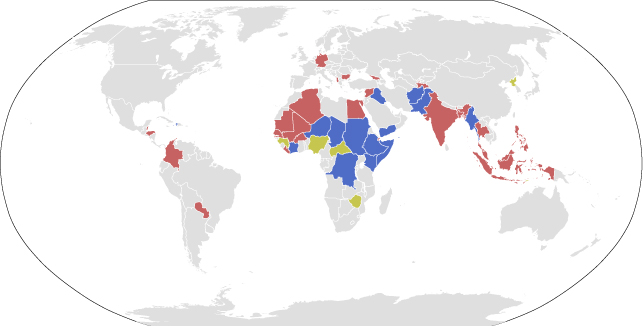
A senior-level officer stood next to a desk at U.S. Special Operations Command headquarters at MacDill Air Force Base in Florida and twirled a black, KA-BAR knife in his right hand. “The tip of the spear,” said the officer, a former Army Ranger,  “it kind of signifies Special Operations.”  Those special operators — “the rock stars of the military,” as the officer described them — are fighting on the front line against terrorists. On any given day, he explained during a briefing, these men and women are conducting operations in 72 countries around the world.

U.S. Special Operations has been an integral part of the military for decades, and its role became particularly important after the terrorist attacks of 2001. Funding for Special Operations increased dramatically after 9/11, and its range of duties also expanded. The most important area for U.S. Special Operations now is Afghanistan, which is known in the military as a Special Ops War. “Afghanistan has always been an intelligence-driven war,” said  James Gordon Meek, a former Washington correspondent for the New York Daily News who has covered counterterrorism and U.S. Special Operations for more than a decade. “The fighting has been done primarily by Special Ops.”

A database of Special Operations that was created for this project includes accounts of about 350 operations — half of them unfolding in Afghanistan. The database is not a scientific study, but nevertheless it shows the breadth of the missions and demonstrates that these operations have become an integral part of the military undertaking in Afghanistan.

With the dramatic growth in Special Operations and its increasingly visible role in Afghanistan, the media coverage of this aspect of the military has never been more important; journalists play a role both in recognizing the valuable work that is being done by special operators in Afghanistan and in other countries around the world and also in exposing misdeeds committed by the special operators and holding them accountable for their actions.

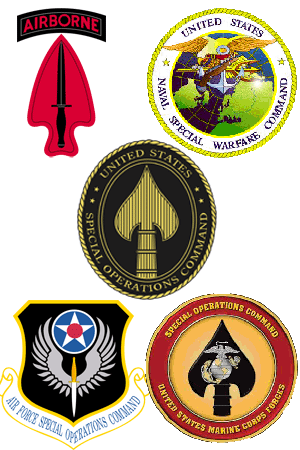
Special Operations Insignias

At the same time, many journalists are daunted by the subject; indeed, the world of Special Operations may seem as exotic as a foreign country and remains a subject that is closed off to much public discussion. The goal of this project is to shed light on the work of Special Operations, as well as its culture, history, and background, and in this way to show journalists how they can approach the subject and make it accessible to a wider audience.

Journalists may view U.S. Special Operations as impenetrable, and in turn special operators tend to see journalists as people encroaching on their territory. The relationship between the military and the media is fraught with tension and misunderstandings.  The one between journalists and special operators is even more difficult, especially since special operators are trained to carry out missions in a quiet, and often secretive, way.

The senior-level officer who worked at the Special Operations Command headquarters agreed to meet with me, but later asked me not to quote him by name. His reserve was typical of those in the field.  During the interview, I referred to an internal investigation that was being conducted by U.S. Special Operations and made a light-hearted comment. He shot me an angry look.

“I was joking,” I said.

“You’re joking around, and you have a notebook and a pen in your hand, and you’re writing everything down,” he said.

“But you have a knife,” I said, glancing at the blade that was lying on his desk.

“What you have is more dangerous,” he said.

The officer was not being terribly serious, but nevertheless the exchange reflected a suspicion on both sides and showed that journalists and special operators often see each other in an exaggerated manner or even as caricatures. The other side is armed and dangerous, at least in a metaphorical sense, and overcoming these psychological and cultural barriers is a challenge. Yet for journalists the importance of overcoming these barriers and covering U.S. Special Operations has only increased over time.

Pages: 1 2 3 4 5

The Training of Independent Thinkers

By TARA McKELVEY
Carnegie Fellow

The special operators who travel the world are among the most elite, and well-trained, forces in the military, and their education begins in classrooms here in the United States at facilities such as the Kennedy Special Warfare Center at Fort Bragg, N.C.  At the Schoolhouse, as the Kennedy Special Warfare Center is known, and at other military facilities across the country, special operators learn about doctrine, policy, and practical aspects of their work.

Navy SEALs insignia

And whether they are studying to be Green Berets at the Kennedy Special Warfare Center, or Air Force Combat Divers at the Combat Divers School in Panama City, Florida, or Navy SEALs at the Naval Amphibious Base Coronado in Coronado, California, they are subjected to some of the most rigorous tests in the military in order to build their physical, mental, and psychological stamina that will prepare them for their missions abroad. And regardless of which branch of the military these special operators come from, they all learn how to act as independently, and with as little gear, as possible while they are deployed to trouble spots around the world.

Sharpest Knives in the Drawer

It was cool and damp on an August afternoon in a forest near Norman, North Carolina, where several dozen soldiers are participating in a Special Warfare Center training program known as Robin Sage, which is a 19-day counterinsurgency exercise that is conducted several times a year. Flies buzzed in the still air, and a clearing in the forest smelled like Sani-Wipes, rain and pine. One of the instructors, a burly Army officer in desert boots, showed a visitor a tripwire that was tied to two trees and acted as an early-warning system in case someone entered the area without permission. Several yards away, an AK-47 was lying on the ground.

Kennedy insignia

The Army officers at the Center are steeped in military doctrine and are specially trained for this kind of work. The officer in desert boots has helped conduct counterinsurgency operations in Afghanistan, for example, and he has read classics by Mao Zedong, the father of the Chinese revolution, and French counterinsurgency expert David Galula. (“He has his obvious flaws,” says the officer, in an understated manner, “advocating torture and stuff.”) The officer maintains that the most important lessons taught during the Robin Sage training exercise come not from texts, but from the men who have learned how to survive in the wilds of the Afghan mountains. “You got all the technology in the world, and it still comes down to the basics,” he says.

Graduates of the program excel at counterinsurgency, which is a slow and difficult undertaking based on creating alliances with local police and military and protecting civilians from harm. A core part of the counterinsurgency work is building bridges, schools, and roads and otherwise making local communities stronger so they can resist the pull of the insurgency. These are the kinds of activities that Kennedy Special Warfare Center graduates will undertake once they are deployed to countries such as Iraq and Afghanistan.

The Army special operators often travel in small groups of 12 and spend weeks at a time in some of the most treacherous parts of the world. “We’re like the Swiss Army knife of the army,” says another instructor in the Robin Sage program who asked not to be identified. “We’re compact and lightweight. We’re not low-impact; we’re high-impact. You’re talking about 12 guys that can shape a nation.”

Since 2000, the Kennedy Warfare School has increased the number of training programs from four to eight classes a year. On any given day, says Major David Butler, a public affairs officer at the Center, they are teaching about 2,200 special operations soldiers in their facilities in North Carolina. The demand for their work is high, and they have consequently stepped up their efforts in training and added instructors, and yet they are still falling short of their staffing goals. The problem, as officers and soldiers explain, is that the training of special operators is lengthy and expensive. “Special Operations soldiers cannot be mass produced,” as the authors of a military document, a September 2010 Fact Sheet issued by the Center, explained. As a result, says one of the instructors, “We are struggling to fill those slots.”

Choirboys Not Allowed

The training of special operators is time-consuming – and ruthless. Anyone who is in the Army, whether a decorated officer or a cook in a DFAC (as a military Dining Facility is known), can announce that they want to join one of the elite, special operator units such as the Green Berets. One of the appealing things about Special Operations, say former members of the unit, is that the groups are highly competitive and prestigious within the military, and yet everyone has a chance, even those with a dodgy past, to become part of the team.

“They’re not looking for a choirboy. They don’t want your first mistake to be in a foreign country,” says an ex-Delta troop commander. “Let’s say you had a DUI. That’s not necessarily a disqualifier. They want you to have faced adversity and that you shouldered it and put it behind you. Just because you had trouble in the past doesn’t mean you’re not going to get a fair shake.”

Aspiring special operators in the Army enter into a month-long tryout in which  physical and psychological fitness is tested. The unit leaders are expansive in their definition of who can try out to be a special operator, but only the best among them will be chosen to enter into the training program. Several hundred people will audition for the Green Berets during one of their tryout periods, explains a former army officer who is familiar with the process, but only about one percent of these individuals will make it through the screening process.

Once they have made it through the screening, they embark on a training program. The length and type of training varies according to the branch of the military and the area of specialization. People who want to become part of Air Force Special Operations, for example, learn how to carry 100-pound backpacks while wearing body armor  for several days in the mountains.

Meanwhile, those who want to become Navy Seals go through a program that is known, officially, as “Hell Week.” Participants train continually for 5 1/2 days, with only four hours of sleep. “Hell Week proves to those who make it that the human body can do 10 times the amount of work the average man thinks possible,” according to a Navy Seals fact sheet. “During Hell Week, you will learn the value of cool headedness, perseverance, and above all, TEAMWORK.”

Special operators learn teamwork – but they are expected to function in an insular environment. Rather than working within the hierarchical structure of the military, special operators operate miles from ground commanders and make decisions on their own. “They’re inserted into hostile environments without all the resources that a regular soldier has,” explains Bruce Hoffman, a Georgetown University professor who has written about U.S. efforts to fight Al Qaeda. “So that is part of their training.”

Special operators develop a grounding in counterinsurgency doctrine while they are studying at the Special Warfare Center and at other facilities in the United States, and they condition themselves to reach peak physical strength. When they arrive in a country in the midst of a crisis, they are prepared to evaluate the situation — often with little or no support from back home. Under these circumstances, the special operators are forced to grapple with some of the toughest decisions. As Georgetown University’s Bruce Hoffman explains, “It’s kind of the search for the truth, in essence.”

Case Study: Shadow Warfare in Pakistan

Bags of wheat flour being transported for villages in Swat Valley, Pakistan, October 27, 2010 / Tara McKelvey

By TARA McKELVEY
Carnegie Fellow

SWAT VALLEY, PAKISTAN — The U.S. Army officer was standing in a field surrounded by the Hindu Kush mountains as Pakistani refugees lifted sacks of potatoes from a Chinook helicopter on a brisk October afternoon. He was leading a group of soldiers on a humanitarian mission to help people who had been trapped in flood-ravaged villages, and I asked him if this was the first time he had been in Pakistan.

We stood together on the grassy tarmac, listening to the whir of the nearby helicopters, and he looked thoughtful. He nodded his head, but he said the word “No” — emphatically. After a moment, I got it: He had been to Pakistan, and he was teasing me with his yes / no response to my question.

He came to Islamabad for the first time in December 2001, he told me, during a period of time when the United States was invading Afghanistan. The officer and about 1,100 other U.S. troops were stationed in Pakistan during the early phase of the Afghan war, according to Gen. Tommy Franks in his book American Soldier, and many of the soldiers were part of U.S. Special Operations who crossed over the border into Afghanistan and fought in battles. After the initial phase of the war, a small group of special operators stayed in Pakistan and began training local forces to fight against the Pakistani Taliban and other militants in this country.

The Army officer was joking with his “yes / no” answer about whether or not he had been to Pakistan, but it captures the contradictory message that the U.S. government sends out about U.S. Special Operations. In the case of special operations, however, it is not a joke. The lives of U.S. and Pakistani soldiers and officers are at stake, as well as questions of national sovereignty and U.S. counter-terrorism policy, and all of these issues are being played out on Pakistani soil.

Pages: 1 2 3 4

How to Contact the Special Operators

Contact information for public-affairs offices at U.S. Special Operations and the four branches of the military that include special operators.

Headquarters of U.S. Special Operations
7701 Tampa Point Blvd.
MacDill AFB, FL 33621-5323
Public.Affairs@socom.mil
Phone 813-826-4600.

Air Force Special Operations Command
Hurlburt Field, FL 32544
Coml: 850-884-5382
DSN: 579-5382

Army Special Operations, U.S. Army Special Operations Command (Special Forces, Rangers, Psychological Operations and Civil Affairs)
Fort Bragg, NC  28310-9110
Phone 910-432-7443/6005
http://news.soc.mil
http://www.facebook.com/usasoc.mil

Marines Special Operations Forces public affairs office
Marine Corps Base, Camp Lejeune, North Carolina
Phone 910-440-0705

Naval Special Warfare Command, Naval Amphibious Base Coronado, San Diego, California
Phone 619-522-2824

Interviewing the Reporters

Writing about Special Operations may seem like a daunting task. These
three journalists — Mark Benjamin, formerly of Salon; Nathan Hodge of The Wall Street Journal; and James Gordon Meek, formerly of the New York Daily News — are all veterans of the Special Forces beat. Here, they discuss their philosophy of covering the military’s most elite group, as well as provide practical tips for people who want to write about the subject.

Mark Benjamin / Gina Gray

Mark Benjamin, a former national correspondent for Salon, worked for the online magazine from January 2005 until November 2010.

How is reporting on Special Operations different from writing about other subjects?

From a reporting perspective, they’re a much more secretive bunch, and they’ll hide all kinds of things, including their own personal pain; in an army full of stigma about any sign of weaknesses, there’s even more stigma among the elite soldiers. They fake it, and they drink. They are also highly intelligent. I don’t mean that they’re quoting Shakespeare; I mean that they are very quick and insightful.

What are some of your experiences in writing about Special Forces?

Because they’re not rank-and-file, salute-the-flag type, there is a certain independence in their thinking, and you will get a rubber-meets-the-road sort of account when you talk to these guys and an unvarnished version of what the hell’s going on. I remember spending a few days with a former Special Operations Forces soldier at Fort Carson, Colorado in early 2009.  Everyone had decided that Gen. David H.] Petraeus had won the war, and this guy in Colorado was like, “We just paid off all the Sunnis to stop shooting us.”

What was it like dealing with Special Operations public-affairs people?

Rangers go beyond enemy lines – that’s what they do for a living. They are literally trained to go where you don’t have resources, and you have to get the mission done, and I think that these kind of people are different. I don’t mean they break the rules necessarily, but they’re much more willing to do what they need instead of sticking to the rulebook. That can bring you a lot of good and a lot of bad. They help you get what you need when they are public-affairs officers. But they’re not human-rights workers. You know what I mean.

What’s special about the people in Special Operations?

You have to qualify to become part of U.S. Special Operations, and it’s a grueling process. There was a study done by Andrew Morgan of Yale Medical School in which he looked at the neuropeptide-y from the saliva of people who were in Special Operations Forces (SOF) and found that those who were SOF-qualified were actually chemically different from the rest of us. Most of it is psychological toughness – they’re special people.

Have you done stories on black operations?

I have done stories on interrogations, intelligence and torture, and these activities were run by teams that involved all different types. There were CIA, contractors, CIA paramilitary, and Special Forces; some of them were on government payrolls as part of the CIA, and others were working as consultants or contractors, but they were all on the same team.

Where did these teams operate?

At the black sites, or the secret prisons  [see Salon’s “Torture Teachers.”]

What are the underreported issues in Special Operations?

Africa: Special Force are running all over the place, and I have no idea what they’re doing. There’s basically no oversight of the people there.

What is the most fun part of covering this subject?

The most fun part about writing is that you’re not supposed to be doing it.

What advice do you have for journalists who want to write about Special Operations?

Be patient. Meet people in person. A lot of these dudes are kind of paranoid, and I don’t know if it’s real or not, and you should be sensitive to that. They must be worried about something.

Pages: 1 2 3

Bibliography of U.S. Special Operations

Hundreds, if not thousands, of books have been written about U.S. Special Forces over the years. Here are some of the best.

Alter, Jonathan. The Promise: President Obama: Year One. New York: Simon and Schuster, 2010.

Coll, Steve. Ghost Wars: The Secret History of the CIA, Afghanistan, and Bin Laden, from the Soviet Invasion, to September 10, 2001. New York: Penguin, 2004.

Cook, Lt. Col. John L. The Advisor: The Phoenix Program in Vietnam. Atglen, Pennsylvania: Schiffer Publishing, 2000.

Faddis, Charles S. Beyond Repair: The Decline and Fall of the CIA. Guilford, Connecticut: Lyons Press, 2009.

Dalton, Fury (pseudonym). Kill Bin Laden. New York: St. Martin’s Griffin, 2009.

Goldsmith. Jack. The Terror Presidency: Law and Judgment Inside the Bush Administration. New York: W.W. Norton, 2009.

Graham, Bradley. By His Own Rules: The Ambitions, Successes and Ultimate Failures of Donald Rumsfeld. New York: Public Affairs, 2009.

Guttman, Roy, and David Rieff, editors. Crimes of War: What the Public Should Know. New York: W.W. Norton & Co., 1999.

Herrington, Stuart A. Stalking the Vietcong: Inside Operation Phoenix: A Personal Account. New York: Presidio Press, 2004.

Hoffman, Bruce. Inside Terrorism. New York: Columbia University Press, 2006.

Fair, Christine and Seth Jones. Counterinsurgency in Pakistani. Washington, D.C: RAND, 2010.

Kessler, Ronald. The Terrorist Watch. New York: Three Rivers Press, 2008.

Knott, Stephen F. Secret and Sanctioned: Covert Operations and the American Presidency. New York: Oxford University Press, 1996.

Lowenthal, Mark W. Intelligence: From Secrets to Policy. Washington, D.C: CQ Press, 2008.

McRaven, William H.  Spec Ops: Case Studies in Special Operations Warfare Theory and Practice. New York: Presidio Press, 1996.

Paddock, Jr., Alfred H. U.S. Army Special Warfare: Its Origins. Lawrence, Kansas: University Press of Kansas, 2002.

Pillar, Paul R. The Mythology of Intelligence: Iraq, 9/11, and America’s Misguided Quest to Understand the World. New York: Columbia University Press, 2010.

Powers, Thomas. Intelligence Wars: American Secret History from Hitler to Al-Qaeda New York: New York Review of Books, 2004.

Rashid, Ahmed. Descent Into Chaos: The United States and the Failure of Nation Building in Pakistan, Afghanistan, and Central Asia. New York: Viking, 2008.

Riedel, Bruce. The Search for Al Qaeda: Its Leadership, Ideology, and Future. Washington, D.C: Bookings Institution Press, 2010.

Robinson, Linda. Tell Me How This Ends: General David Petraeus and the Search for a Way Out of Iraq. New York: Public Affairs., 2008.

Rothstein, Hy S. Afghanistan and the Troubled Future of Unconventional Warfare. Anapolis, Maryland: U.S. Naval Institute Press, 2006.

Thiessen, Marc. Courting Disaster: How the CIA Kept America Safe and How Barack Obama Is Inviting the Next Attack. Washington, D.C: Regnery Press, 2010.

Tierney, John J. Chasing Ghosts: Unconventional Warfare in American History. Dulles, Virginia: Potomac Books, 2007.

Wittes, Benjamin. Law and the Long War: The Future of Justice in the Age of Terror. New York: Penguin, 2008.

Wittes, Benjamin. Legislating the War on Terror: An Agenda for Reform. Washington, D.C.: Brookings Institution Press, 2009.

Woodward, Bob. The War Within: A Secret White House History 2006-2008. New York: Simon and Schuster, 2009.

Zenko, Micah. Between Threats and War: U.S. Discrete Military Operations in the Post-Cold War World. Palo Alto, California: Stanford University Press, 2010.

What People Say About Special Operations

Government officials, military experts and others have weighed in on the value, and the cost, of U.S. Special Operations over the years. Here are some of their comments.

Who Are Special Operators?

“The best force against a shadowy terrorist enemy is a group of men and women called ‘the silent professionals.’ Special operators understand the fight and know they are engaged in ‘prolonged, messy engagements where tactical success does not necessarily yield strategic success; where cultural knowledge and language skills often mean a great deal more than raw fire power; where victory ultimately is not measured by how well we do the job but how well we can train and empower other nations to defend themselves.”

— Defense Secretary Robert Gates. (U.S. Department of Defense’s American Forces Information Service, May 22, 2008.)

“In some places, we [U.S. Special Operations] are quite obvious in our presence. In some places, in deference to host-country sensitivities, we are lower in profile. In every place, Special Operations forces activities are coordinated with the U.S. ambassador and are under the operational control of the four-star regional commander.”

— U.S. Maj. Gen. Eric Olson, head of Special Operations Command. (“U.S. ‘secret war’ expands globally” by Karen DeYoung and Greg Jaffe, The Washington Post, June 4, 2010.)

“We go into these far-off places, we chase the enemy down, we bring the stability, [and] we bring peace and central government control so that that valley no longer becomes a safe haven for the enemy.”

— Col. Walter Herd, former U.S. chief of Special Forces in Afghanistan. (“Hunt for bin Laden could end in a day or decades” by Matthew Pennington, The Associated Press, June 24, 2004.)

Pages: 1 2 3

A Brief History of U.S. Special Operations

By TARA McKELVEY
Carnegie Fellow

Special Operations Command was founded on disaster. The Iran hostage rescue operation of April 1980 — when three of the eight helicopters that were supposed to be used for the mission had mechanical problems, and eight U.S. servicemen died — was a turning point for the United States, and for the U.S. military, too. Americans were humiliated by the spectacle of fifty-three people being held captive in the U.S. Embassy in Tehran, and military officers struggled to find a way to ensure that the branches of the military worked together more effectively in order to prevent a similar situation from unfolding in the future.

“Once upon a time all the special operators were trained and kept separate in different branches of the military, and this mission showed the importance of unity,” a senior-level officer at U.S. Special Operations Command headquarters at MacDill Air Force Base in Florida told me, describing the hostage crisis as a galvanizing force that led to creation of U.S. Special Operations. “Congress decided, ‘We can’t let this happen again.’”

The story of the hostage crisis received intense scrutiny. Indeed, one of the most popular news programs in the nation, Nightline, was established during the hostage crisis as journalist Ted Koppel tracked the number of days that the Americans were held at the Embassy. Since that time, journalists and Special Forces have worked in tandem, and have also been at odds, as Americans have faced their most trying times.

Some time after the failed attempt to rescue the hostages in Iran, a review panel, headed up by Admiral James L. Holloway, was created by Joint Chiefs of Staff in order to find a better way for the military to respond to crises. The work of the Special Forces had been deteriorating for decades, particularly since the Vietnam war when its funding was cut dramatically. The members of the Holloway panel made a series of recommendations that were designed to make U.S. Special Forces more nimble and effective and to ensure that they would be able to successfully resolve crises like the one in Iran and supported the creation of an umbrella unit that would oversee this part of the military. President Ronald Reagan signed off on the establishment of U.S. Special Operations on April 13, 1987.

“That was the genesis of it,” explained Lt. Gen. William “Jerry” Boykin, a former Pentagon’s senior military intelligence official who served under President George W. Bush.

Since then, Special Operations has expanded its mandate from rescuing hostages to fighting drug traffickers and terrorists, jumping into countries that ranged from Grenada to Somalia and building up a fleet of covert planes and helicopters, as well as engaging in psychological operations and Civil Affairs, which trains soldiers and officers to work with local people in a host of countries and assist in fighting against insurgencies. The men and women who work in Civil Affairs have also worked extensively to provide humanitarian aid to people in Haiti after the island was hit by natural disasters, and they helped restore public transportation, electrical grids, and other parts of the infrastructure in Bosnia and assisted in the creation of a national government. In Kosovo, soldiers in the Civil Affairs division set up a radio station in Pristina and helped ensure that people had access to running water, according to the “United States Special Operations Command History” (USSOCOM History and Research Office, 2008). (Embedded above, right).

In recent years, members of the Psychological Operations unit created websites to fight against the propaganda circulated by terrorist groups in Iraq. They have also funded American-style magazines in Latin America and provided $1.5 million for the creation of a Mali documentary about “tolerant tenets of Islam.”

Since 2001, one of the elite units, Joint Special Operations Command (JSCOC – it is pronounced “j-sock”), has focused on a global campaign of hunting down and killing the leaders of Al Qaeda and other violent groups, and today the pursuit for terrorists is the main focus of the unit. Joint Special Operations Command encompasses several branches of the military, including the Army’s Delta Force, the Navy’s SEAL Team 6, and the 160th Special Operations Aviation Regiment, and its umbrella organization in the military is the United States Special Operations Command, located in Tampa, Fla., with the strike forces stationed at Fort Bragg.

Special Operations Insignias

While Special Operations encompasses a variety of missions and tasks, ranging from the establishment of radio stations and websites to restoring electrical grids to the building of roads and schools in war-torn countries, the division of Special Operations that has accrued the most funding, equipment, and personnel has been the side that focuses on “direct action,” or the pursuit of terrorists. Direct Action is often referred to as “kinetics,” which are “basically very offensive things like raids, door kicking,” Michael P. Noonan, the managing director of the Program on National Security at Foreign Policy Research Institute, a Philadelphia-based research organization. “Non-kinetic is working by, with and through local population, or counterinsurgency work.”

Some military analysts believe that the emphasis on the offensive side of Special Operations is short-sighted. “That’s the Hollywood part. The most exciting part,” John Nagl, president of a Washington-based, nonpartisan organization, the Center for a New American Strategy, told me, describing the dangerous Special Operations missions that are undertaken to capture and kill terrorists. “But in some ways it’s the least important part.” He argues that the significant work for special operators and soldiers lies in helping people in Iraq, Afghanistan, and other countries to rebuild civil society and other institutions and in this way establish a more lasting peace.

Journalists have traditionally been drawn to the more glamorous, and dangerous, aspects of U.S. Special Operations and focused their coverage on the capture and killing of terrorists and on efforts to rescue Americans, dating back to the Iranian hostage crisis. Covering prosaic aspects of Special Operations, such as their efforts at promoting civil society in countries overseas, may seem less appealing, and yet provides many important stories about the U.S. military and its role in the world.

A First-Hand Account: Lessons from the Field

By TARA McKELVEY
Carnegie Fellow

In the fall of 2004, I started writing a series of investigative articles about crimes that took place at the Abu Ghraib prison in Iraq; these articles were eventually turned into a book entitled Monstering: Inside America’s Policy of Secret Interrogations and Torture in the Terror War.

Here are some of the things that I learned about reporting on Special Operations and other aspects of the military:

How to Find Sources.

Before I start reporting on a story, I spend hours on the computer, looking for articles, websites, blogs, and anything that will provide information about the subject. I compile a database with the names and background information of people that I would like to talk to – dozens usually, and sometimes hundreds. Then I start making phone calls or just get in my car. After the Abu Ghraib scandal broke in 2004, one of the Military Police who were implicated in the scandal – Lynndie England – became notorious for her role in the abuse of prisoners and was sentenced to prison. I had been investigating the scandal for months and wanted very much to meet her, but her family refused to speak with journalists.

On a hot August afternoon, I drove to the trailer park in Fort Ashby, West Virginia, where her parents lived and knocked on the door. I brought along some of my magazine articles, including one about female soldiers in Iraq, and smoked cigarettes with her mother in the kitchen. Four days later, I got an exclusive, jailhouse interview with Lynndie England in a naval brig in San Diego. I got the interview because I went to visit her mom. Too often, journalists rely on only their laptop and a cell phone to do reporting. Sometimes, it is better to go and talk to people.


How to Interview People about Special Operations.

Talking to people involved in this type of conflict is not always easy. People who have been part of U.S. Special Operations are reluctant to say anything about what they have done; if they are currently part of the unit, they can’t say anything – by law. I look for people who have left the service. They are more open about describing their experiences, and some of them are angry about what they have seen. They are often the best sources.

How to Find Documents.

File a Freedom of Information Act request. It’s easy, and the government is required to assist you in getting the documents that you ask for. One organization, the National Freedom of Information Coalition, has drawn up a sample letter that you can use when you file a request.

Keep in mind, though, that when you are writing about Special Operations, the bar is higher. In truth, I never got hold of anything through the Freedom of Information Act, because most of the stories I was writing involved aspects of the military that were protected by the government’s state secrets’ defense. In other words, the government does not have to give you information about an agency, or anything at all, if state secrets might be revealed.

I relied extensively on documents for my reporting, however. I just received them in different ways; a former military officer e-mailed me Power Point slides and CDs that contained images from inside the Abu Ghraib prison, for example. Other times, lawyers gave me documents that were related to cases that they had filed against the government. In addition, I found documents in a database that had been compiled by lawyers working for the American Civil Liberties Union. Recently, WikiLeaks has also been an excellent source of government documents.

How to Verify the Information.

I double- and triple-source material before I publish it. That means I hear things from a source and then look for documentation that backs up their story. In one section of my book, for example, I wrote about a Baghdad man who was held at the notorious Camp Nama, which was run by a covert unit of U.S. Special Operations.

After he told me about his experiences at Camp Nama, I checked with the U.S. military to verify that he had been held as a detainee and confirmed the details of his story – as best I could – with documents such as a Human Rights Watch report entitled “No Blood, No Foul” that provided extensive details about the place, and also with New York Times stories about the prison.

Through a variety of sources, I determined that the way he had described the room where he was held, the dimensions of the prison, and the abuse that he and the other prisoners had undergone were consistent with other accounts that had been published.

How to Keep You and Other People Safe While Doing the Reporting.
I try to use people’s names when I write my articles because that adds credibility to the story and moreover does not allow sources to settle scores or get back at people through anonymous quotes. When I write about certain aspects of the military, though, I do interviews on background to protect my sources. Unfortunately, I know what the stakes are. Two people were killed after I interviewed them in Amman, Jordan, in 2005, and I think about them every day of my life.

I also try to protect my own safety while doing stories. I never go to someone’s house for an interview, for example, or ride with them in a car. And when I am traveling, whether in Moscow or in Murray, Kentucky, I tell a friend when I am leaving for an interview and where the interview will take place and afterwards let them know I’ve returned. I’d rather be the kind of person who later says, “What was I worried about?” then to be the kind of person who finds herself in a situation that she wishes she weren’t.